Koło Badań Psychologicznych Experior

Gender Differences in the Relationship Between Human Values and Compulsive Pornography Use

Autorstwa: Julia Bilicka, Paweł Atroszko, Stanisław Czerwiński
Na: HUMANITAS Global Congress of Flourishing 2025


Streszczenie:

Compulsive pornography consumption is formally recognized as an impulse control disorder and is associated with excessive pornography use patterns despite adverse consequences, including emotional distress, impaired relationships, and difficulties with self-regulation. Although widely studied in terms of prevalence and psychological outcomes, less is known about how individual value systems may influence susceptibility to compulsive pornography use. The aim of this study was to examine gender differences in the relationship between Schwartz’s Basic Human Values and compulsive pornography use. The Compulsive Pornography Consumption (CPC) Scale was used alongiside the Short Schwartz Values Survey (SSVS) among 1285 students. Results from linear regression analyses separately for females and males showed that power values significantly predicted higher levels of compulsive pornography use in both genders. Among females, stimulation also had a significant positive effect, while among males, universalism was positively associated with compulsive pornography watching, and achievement and self-direction were negatively associated with it. These findings suggest that personal value orientations play a meaningful role in understanding individual vulnerability to pornography addiction, with power emerging as a shared risk factor for both genders. Gender-specific patterns highlight the importance of considering individual differences in motivational priorities when addressing problematic pornography use. Given the gender differences, more research in this area is warranted.

Słowa kluczowe: Schwartz’s Universal Values, compulsive pornography consumption, impulse control disorders, sexual behaviour.

Czytaj dalej

Study Addiction among Females with ADHD: The Moderating Role of Pharmacological Treatment

Autorstwa: Alicja Lipińska, Paweł Atroszko, Stanisław Czerwiński
Na: HUMANITAS Global Congress of Flourishing 2025


Streszczenie:

Attention-Deficit/Hyperactivity Disorder (ADHD) is associated with academic underperformance that may have detrimental effects on the quality of life, mental health, and psychosocial functioning. To compensate for co-occurring disorders, neuropsychological deficits and functional impairments, students with ADHD may develop study addiction and use compulsive study behaviour as a maladaptive stress-coping strategy. However, previous studies indicate that pharmacological treatment may alleviate core symptoms of ADHD, as well as associated social and academic impairments. The aim of this study was to investigate the relationships between study addiction and ADHD symptoms among females, and the moderating role of pharmacotherapy in this relationship. The study included 94 female students with an ADHD diagnosis, from whom 21 received systematic pharmacological treatment. Moderation analyses revealed that ADHD was positively related to study addiction only for those women who receive pharmacotherapy. Conversely, for females who do not take stimulant medication, the relationship between study addiction and ADHD was non-significant. These results suggest that in women with ADHD, pharmacotherapy may improve cognitive performance, motivation, and goal-oriented sensitivity and thereby shift impulsivity and addiction-prone tendencies into socially approved behaviours such as studying. Without pharmacotherapy, symptoms may be too impairing to maintain such study-oriented behaviour. Based on these findings, further investigations of compulsive study behaviour and its relation to pharmacological treatment among ADHD students are highly warranted.

Słowa kluczowe: ADHD, academic performance, stimulant medication, study addiction.

Czytaj dalej

Caffeine Consumption Mediates the Relationship Between Study Addiction and Perceived Stress

Autorstwa: Oliwia Kosecka, Stanisław Czerwiński, Paweł Atroszko
Na: HUMANITAS Global Congress of Flourishing 2025


Streszczenie: 

Problematic overstudying has been conceptualized as addictive behavior, so-called “study addiction.” Study addiction is negatively associated with general quality of life, general health, and sleep quality. Caffeine is a widely used stimulant that enhances readiness and the ability to remain mentally alert after fatigue. University students, especially those showing symptoms of problematic overstudying, may consume more caffeine to increase their academic performance. Previous research has shown that both study addiction and caffeine consumption are positively associated with general perceived stress. The study aimed to investigate the relationship between study addiction, caffeine consumption, and perceived stress in university students. It was hypothesized that study addiction, caffeine consumption, and perceived stress would be positively related, with caffeine consumption mediating the relationship between study addiction and stress. Sample 1 consisted of 444 university students, and Sample 2 consisted of 2392 university students. The Bergen Study Addiction Scale, Perceived Stress Scale-4 and a question about average daily caffeine consumption were used. The results showed that caffeine consumption partially mediated between study addiction and perceived stress. Students with high study addiction tend to consume more caffeine and, therefore, show higher stress levels. The results found in Sample 1 were cross-validated in Sample 2. They emphasize the importance of raising awareness about the negative health consequences of caffeine consumption among students with high study addiction. To promote flourishing in academic settings and beyond, limiting caffeine consumption and promoting healthy alternatives, such as rest when the body requires it, is recommended.

Słowa kluczowe: caffeine, problematic overstudying, stress, study addiction.

Czytaj dalej

Caffeine Intake Mediates the Relationship Between Problematic Overstudying and Psychological Distress

Opublikowane w Nutrients (140 pkt. wg. MEiN)

Autorzy: Oliwia Kosecka, Edyta Charzyńska, Stanisław K. Czerwiński, Agata Rudnik, Paweł A. Atroszko


Streszczenie:

Background: Problematic overstudying has been conceptualized as an addictive behavior (study addiction) and an early form of work addiction. The majority of students showing compulsive studying behaviors experience chronic and high stress and symptoms of generalized anxiety disorder. Caffeine is a widely used stimulant that enhances alertness and cognitive performance, especially under fatigue. University students, particularly those exhibiting problematic overstudying, may consume more caffeine to improve academic performance. Previous research has shown that caffeine consumption is positively associated with perceived stress and anxiety. This study examined the mediating role of caffeine consumption in the relationship between problematic overstudying and psychological distress (perceived stress, anxiety, and depression) among university students.

Methods: Sample 1 consisted of 436 university students, and Sample 2 included 3421 students. The Bergen Study Addiction Scale, Perceived Stress Scale-4, and a measure of average daily caffeine consumption were used.

Results: Results showed that caffeine consumption partially mediated the relationship between problematic overstudying and perceived stress. Students who study compulsively tended to consume more caffeine, which was, in turn, associated with higher perceived stress. This finding was replicated across both samples, and in the second, larger sample, caffeine intake also mediated between problematic overstudying and anxiety and depression.

Conclusions: Excessive caffeine use among students who manifest problematic overstudying may increase their risk of developing, or aggravate existing, symptoms of anxiety or mood disorders. Limiting caffeine intake and promoting healthy alternatives, such as rest and recovery, is recommended to support mental health in this population.

Słowa kluczowe: anxiety; caffeine; depression; stress; study addiction.

Czytaj dalej

Dr hab. Paweł Atroszko w Rozmowy W Formie: Maciej Kozłowski Podcast


Wypowiedź dra Atroszko o uzależnieniu od pracy i uczenia się oraz wiele więcej na kanale Rozmowy W Formie: Maciej Kozłowski Podcast: link


Problematic overstudying, Big Five personality, and music performance anxiety: associations with well-being and GPA

Opublikowane w Health Psychology Report (140 pkt. wg. MEiN)

Autorzy: Piotr M. Luszuk, Patryk Stelnicki, Rafał Lawendowski, Stanisław K. Czerwiński, Paweł A. Atroszko


Streszczenie:

Background:
Problematic overstudying is a compulsive and pathological overinvolvement in studying leading to harm and considerable functional impairments. It is conceptualized as “study addiction,” a precursor to work addiction. It has been investigated within the addictive behaviours framework in general populations of students for over a decade. A previous study analysed the problem among young musicians as a particularly vulnerable group. It found some important differences in potential personality risk factors among music academy students compared to general populations of students and showed an im-portant role of social anxiety. The current study aimed to validate these findings in a separate larger sample and extend them by investigating the role of music performance anxiety (MPA).

Participants and procedure:
The study was conducted among 213 students of music academies. Valid and reliable measures of study addiction, MPA, Big Five personality and well-being were used.

Results:
The results showed that MPA played a similar role as social anxiety in terms of being a predictor, mediator, and moderator of the main replicated effects supporting the hypothesised mechanisms regulating study addiction. However, extraversion was not associated with study addiction in multiple hierarchical regression analysis, but conscientiousness and neuroticism were. Study addiction was associated with indicators of decreased well-being, above and beyond MPA, and personality.

Conclusions:
These results show that MPA plays an analogous role to social anxiety and that the role of Big Five personality in study addiction among young musicians requires further investigation due to inconsistent findings.

Słowa kluczowe: academic performance, learning engagement, personality, musical performance anxiety, study addiction

Czytaj dalej

Identifying individual vulnerabilities and problematic behaviours hindering musicians’ development: Obsessive-compulsive personality disorder vs. study addiction

Opublikowane w Musicae Scientiae (140 pkt. wg. MEiN)

Autorzy: Paweł Atroszko,  Aleksandra Buźniak, Natalia Woropay-Hordziejewicz, Michał Kierzkowski, Rafał Lawendowski


Streszczenie:

Individual vulnerabilities, such as particular personality characteristics, may be important risk factors that can hinder the development of young musicians and affect their professional careers. This study aimed to examine the relationship between obsessive–compulsive personality disorder (OCPD) and rigid perfectionism, study addiction, and well-being among music students. It was hypothesized that OCPD is a strong risk factor for addictive studying; compulsive learning, however, is an addictive disorder with its own etiology, symptomatology, epidemiology, and course. A total of 255 students from various music academies in Poland participated in the study. It used the Bergen Study Addiction Scale, assessing seven core addiction symptoms related to studying; Five-Factor Obsessive Compulsive Inventory; Perceived Stress Scale; Hospital Anxiety and Depression Scale; Three-Item Loneliness Scale; and a single-item measure of learning engagement. Both study addiction and OCPD showed positive relationships with stress, anxiety, depression, and loneliness. Multiple hierarchical regression analyses showed that study addiction was related to well-being above and beyond OCPD and was more strongly associated with compromised functioning. Furthermore, mediation analyses indicated that study addiction is a full mediator between OCPD and stress, as well as loneliness, and a partial mediator for anxiety and depression. Moderation analyses revealed that OCPD was related to well-being only for those participants who scored low for study addiction. There was no significant relationship between OCPD and well-being for participants who scored high for study addiction. These results strongly indicate that OCPD is an important risk factor for study addiction although these are different disorders. Like students with high levels of OCPD, students with high levels of study addiction but low levels of OCPD experience reduced well-being. The polythetic cut-off score showed that 24.6% of young musicians could be addicted to studying. Due to the high prevalence of this disorder, further systematic studies among young musicians are highly warranted to prevent and provide better help with the problem.

Słowa kluczowe: anxiety, depression, well-being, loneliness, learning engagement, work addiction, workaholism

Czytaj dalej

Biofeedback EEG in the prevention of compulsive work-related behaviors and reduction of their negative consequences: Preliminary results and barriers to providing support

Opublikowane w Journal of Behavioral Addictions  (140 pkt. wg. MEiN)

Autorzy: Paweł Atroszko, Natalia Woropay-Hordziejewicz, Aleksandra Buźniak, Aleksandra Wybrańska, Anna Brykała, Klaudia Bochniarz, Piotr Luszuk, Krzysztof Jankowski, Julia Mackiewicz, Aleksandra Cupta, Gabriela Szczepańska


Streszczenie:

The study aimed to examine the effectiveness of alpha wave relaxation training using Biofeedback EEG for reducing compulsive work-related behaviors, associated with difficulties in relaxing, and their negative consequences and investigate the potential barriers to providing support. Biofeedback EEG is effective in developing the ability to relax and reduce stress. Similar studies among people addicted to substances showed an anxiety reduction and decreased consumption.

Methods: The invitations to the screening surveys were sent to employees via employers and students via universities in Tricity in Poland. Individuals that scored above the established cut-off score on Bergen Work Addiction Scale or Bergen Study Addiction Scale received feedback with information about the possibility of participating in a free EEG-Biofeedback relaxation training.

Results: The preliminary results showed that 189 of 705 (27%) of the administration staff at one of the employers who all received invitation emails completed the survey. Of them, 53 (28%) had results above the cut-off score for work addiction, with 23 (43%) having the highest possible score on burnout and 47 (89%) having a very high score on burnout. However, only one person (> 2%) applied for the free training sessions. Results of the EEG-Biofeedback sessions will be available in the mid-2023.

Conclusions: Individuals at risk or addicted to work rarely seek help even when it is easily available and free. Compulsive overworking and its negative consequences need wider recognition to enable support-seeking among those affected. Early prevention programs constitute feasible cost/effective solutions, overcoming barriers typical for adult working populations.

Słowa kluczowe: biofeedback, workaholism, barriers, stress, relaxation, work addiction

Czytaj dalej

Validity, Reliability, and Cross-Cultural Comparability of a Problematic Overstudying Scale across European, North American, and Asian countries

Opublikowane w International Journal of Mental Health and Addiction (40 pkt. wg. MEiN)

Autorzy: Paweł Atroszko, Edyta Charzyńska, Aleksandra Buźniak, Stanisław Czerwiński, Mark D. Griffiths, Anna Jankowska, Shanmukh Vasant Kamble, Zuzanna Mizik, Halley M. Pontes, Jacob Shane, Steve Sussman, Natalia Woropay-Hordziejewicz, Ståle Pallesen


Streszczenie:

Problematic overstudying has been conceptualized as a potential addictive disorder and an early form of work addiction. Previous studies have shown that it is a different phenomenon from healthy learning engagement and is associated with considerable functional impairments. A valid, reliable, and convenient screening measure is warranted to provide cross-culturally comparable and generalizable findings, particularly from large epidemiological studies. The seven-item Bergen Study Addiction Scale (BStAS), based on an addiction framework, was administered alongside learning engagement and anxiety measures in a total sample of 5,884 university students from three continents and five countries: India, Norway, Poland, Portugal, and the United States. The modified five-item version of the scale showed measurement invariance across countries and between genders and allowed for meaningful cross-cultural and gender comparisons. Scores on the BStAS were positively associated with learning engagement, anxiety, and female gender across countries. Clinically significant anxiety levels occurred about 1.7 times more often among students who scored above the cutoff for study addiction. It is concluded that the five-item BStAS is a valid, reliable scale that can be used in different cultures and provides comparable and generalizable results. Future studies with the BStAS may provide greater insight into the nature of problematic overstudying.

Słowa kluczowe: Bergen Study Addiction Scale, Cross-cultural, Overstudying, Study addiction, Workaholism, Work addiction

Czytaj dalej

Nagroda dla Najlepszego Opiekuna Roku 2023 w konkursie StRuNa

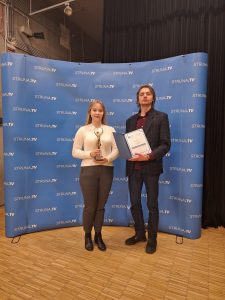
Z dumą ogłaszamy, że Opiekun Koła dr Paweł Atroszko został nagrodzony statuetką dla Najlepszego Opiekuna Roku 2023 w konkursie StRuNa! Gala finałowa odbyła się w sobotę 18 listopada 2023 roku w Auli Akademii Sztuk Pięknych w Warszawie. Nagrodę w jego imieniu odebrali prezes Aleksandra Wybrańska oraz członek Koła Piotr Luszuk.

Gratulacje!

Czytaj dalej

1 2